





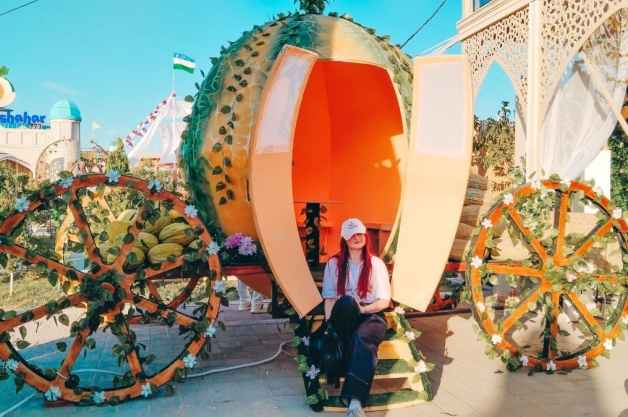
Melon Festival in Khiva (Qovun Sayli): A Guide From the Team That Was There
Every August, Khiva transforms into Uzbekistan's melon capital for three days. The "Qovun Sayli" (Melon Festival) is one of the country's most atmospheric summer celebrations, combining a fair, concerts, crafts, and Khorezm's culinary traditions.
The Dolores Travel team attended the festival in 2026 as part of an official press tour organized by the State Committee for Tourism Development — below is what we saw, tasted, and what's worth knowing if you're planning a visit.
When the Festival Takes Place
Qovun Sayli traditionally takes place in the first ten days of August, over three days, timed to the peak of the melon harvest season in Khorezm. In 2026, the festival ran from August 7 to 9. Exact dates for the following year are announced closer to summer — check our website or contact our team when planning your trip.
Why It's Worth Seeing in Person
The festival's scale grows every year. In 2026, "Qovun Sayli" officially entered the Guinness Book of Records — Khiva set a world record for the largest simultaneous melon tasting: 259 people tasted more than 10 varieties of Khorezm melons at once. That year's exhibition featured over 200 melon varieties and processed products, and more than 700 tons of melons were used to decorate the festival pavilions. Over three days, the festival drew 186,000 visitors, including 36,000 from abroad.
The festival draws 13+ districts and cities of the region every year, each with its own themed pavilion, craft displays, and regional melon varieties.
Opening Ceremony: The Scale of a State Celebration
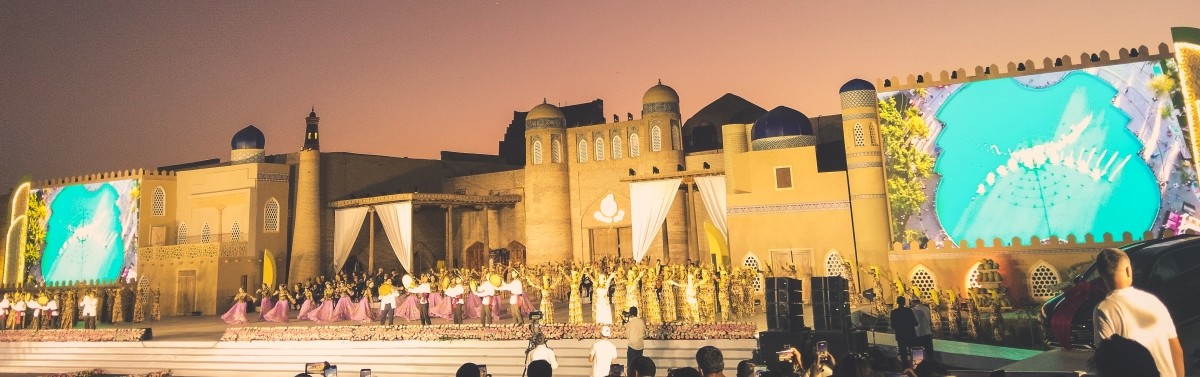
The opening ceremony of "Qovun Sayli" — a mass costumed show set against the real fortress walls of Ichan-Kala.
The opening ceremony is staged as a full theatrical production right on the grounds of Ichan-Kala: the stage is built directly into the ancient city's genuine fortress walls and gates, flanked by huge LED screens showing graphics, festival symbolism, and the live action on stage. Against the backdrop of the old city's real minarets and domes, the effect is that the ancient fortress itself comes alive.
On opening night, Khorezm's finest performers took the stage all evening — music, energetic dances, and songs followed one another without pause, with costumes and color palettes changing from number to number. Particularly notable was lazgi — a fast-paced Khorezm dance that demands real stamina: it was striking to see performers of all ages, from children to elders, keep up the tempo. The program also included a theatrical performance based on local love legends, and an unexpected highlight of the evening was a performance of an Italian opera aria. The ceremony's climax was a festive fireworks display over the walls of Ichan-Kala.
The opening ceremony operates as a closed, protocol-level event: guests, including delegations and partners, access the stands via personal invitations — thick branded cards reading "Qovun Sayli Festivali — Ochilish marosimiga — Taklifnoma" with a holographic seal. The festival's main program — the fair, pavilions, and daytime events — is open to all visitors without restriction. For guests hoping to attend the closed events, coordination with the host side is required — the Dolores Travel team checks invitation availability with organizers, though space is not guaranteed.
What the Festival Looks Like From the Inside
The festival begins well before you reach the main square — as you approach Ichan-Kala, the air already carries the sweet scent of ripe melon, and colorful pavilions line the road, each representing its own district of the Khorezm region — from Shovot to Qo'shko'pir — each with its own architectural style: carved wooden roofs, national majolica tilework, decorative water wheels, and gilded jugs referencing the region's ancient irrigation traditions. Alongside the district pavilions are elaborately designed stands from the festival's corporate sponsors, each with its own architectural concept. Guests are greeted by performers in national costume, and Khorezm music fills the air, practically inviting you to join the dancing.
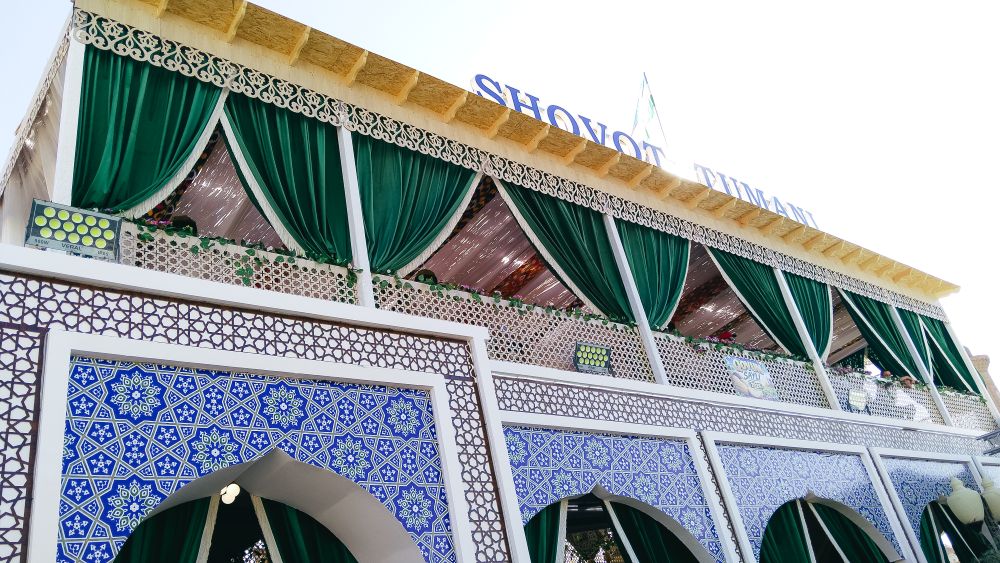
The Shovot district pavilion — every district has its own architectural approach, from carved roofs to traditional majolica tilework.
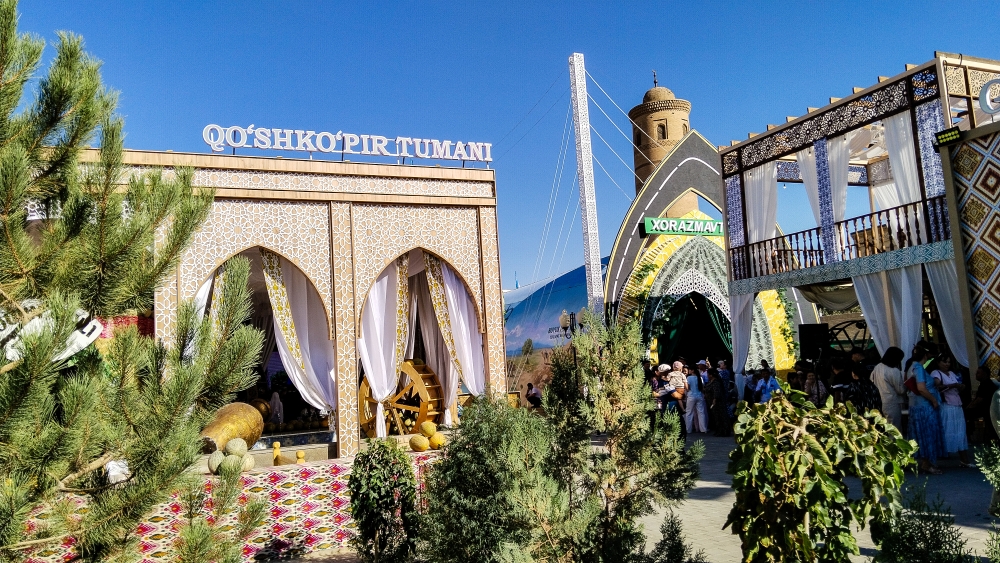
The Qo'shko'pir district pavilion — a carved white facade with a decorative water wheel, a symbol of Khorezm's traditional irrigation systems.
Inside the pavilions, staff in traditional dress greet guests — this is also where tasting areas are set up, with local refreshments: guests are seated at a dastarkhan (traditional spread) with flatbread, sweets, and tea served in national pottery, refreshments are also arranged on carved stands, and performers in vivid costumes keep the festive mood going.
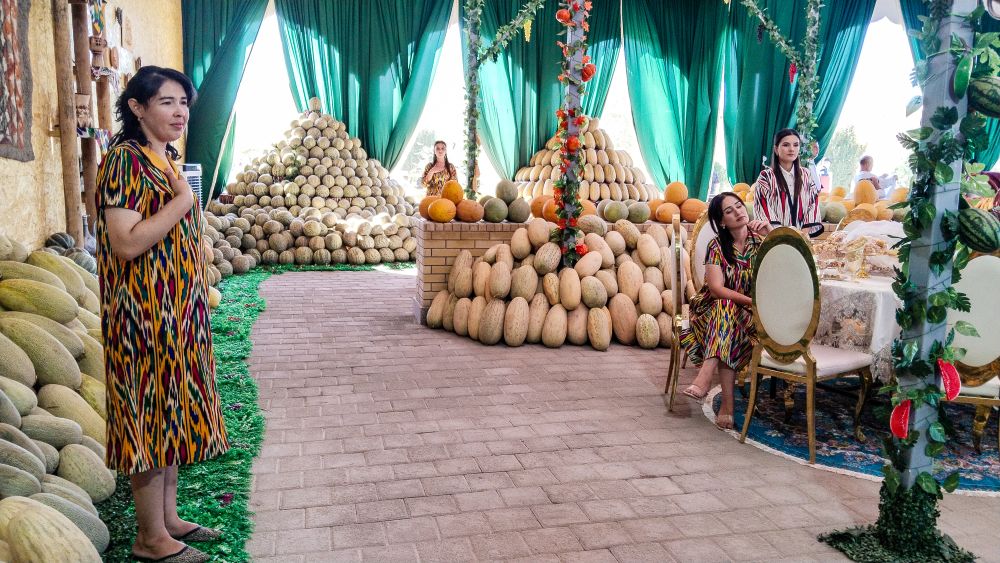
Decorating the pavilions alone takes over 700 tons of melons — mountains of select fruit greet guests right at the entrance.
Beyond that — it's not just a fair, it's a genuine varietal exhibition: hand-built melon pyramids taller than a person line the walkways, dozens of named melon varieties — "Qora Ko'tir," "Shakarpalak," "Bo'rikalla," "Shoyi Qovun," "Qari Qiz," and others — are arranged in pyramids along vaulted shelves, each with its own name tag. Nearby are entire installations made from traditional Khorezm bread, built into tower shapes. The pavilions are designed as vaulted tunnels with carpets and hanging lanterns — visitors, many of them foreign tourists, linger here, photographing every detail.
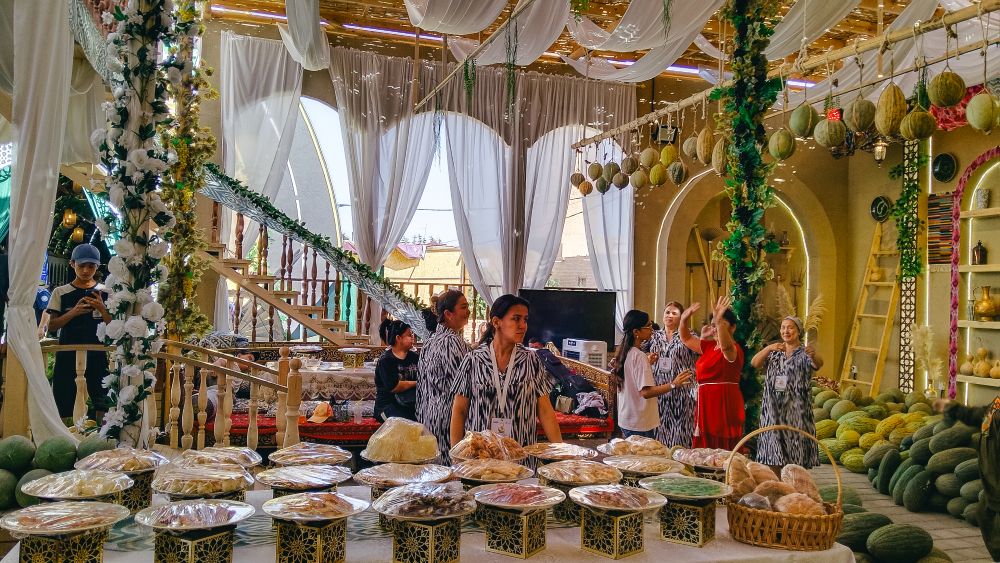
Festival hospitality — refreshments on carved stands and staff in traditional dress welcome visitors to the pavilions.
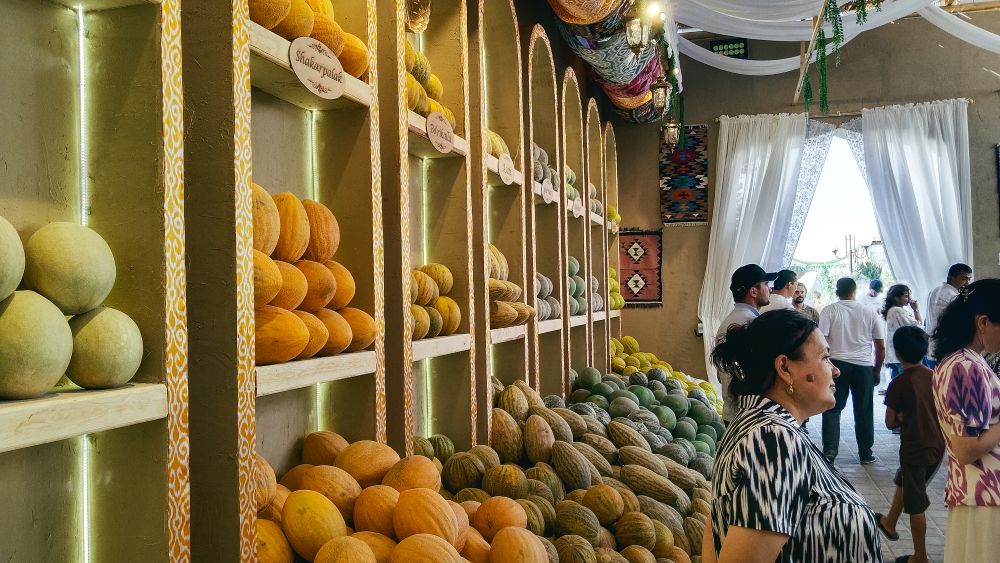
An exhibition of Khorezm melon varieties — dozens of varieties, each with its own name tag and history, from "Shakarpalak" to "Bo'rikalla."
Nearby are stalls with processed melon products: melon honey, dried and candied sweets, homemade preserves. Craftsmen demonstrate pottery, weaving, and carving — much of it can be watched and tried hands-on.
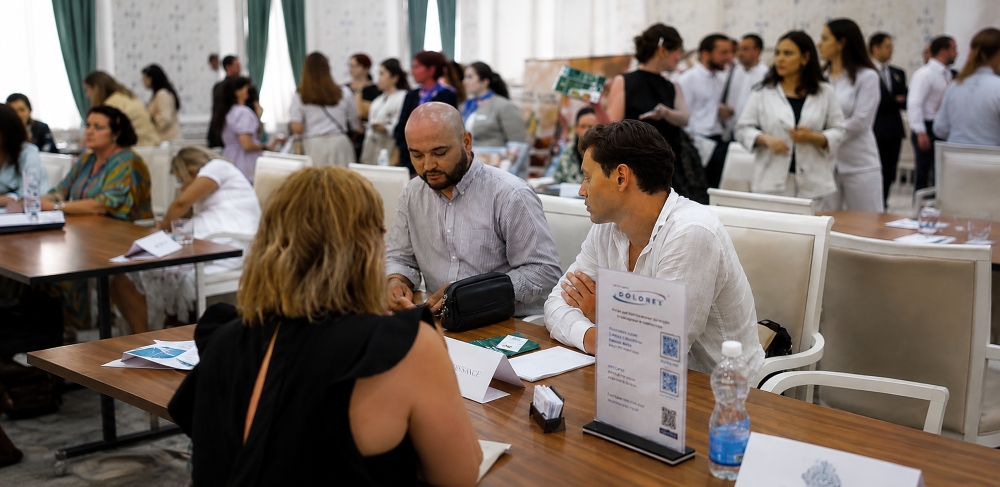
The festival's second day was its own event entirely: a B2B meeting for tourism industry professionals took place on the grounds of Arda Khiva, attended by the Dolores Travel MICE department as well as GoToStans — a company within the Dolores Travel group. Face-to-face conversations with industry colleagues in the festival's informal setting offered a chance to exchange contacts and discuss partnership opportunities.
That evening, the mood shifted to a concert: DJ King Macarella blended contemporary beats with traditional Uzbek melodies, followed by a mass singalong with Russian singer MakSim, joined by a crowd of 40,000. Khorezm clearly knows how to throw a celebration — we're already curious what the organizers will come up with next year.
In our team's experience, there's a real difference between reading about a melon festival and actually standing inside a pavilion filled with the scent of hundreds of Khorezm melon varieties, surrounded by live music. This is one of those cases where no record-breaking statistic fully captures the atmosphere — you have to see it for yourself.
Given how packed the schedule is hour by hour, without a planned route it's easy to miss half of what's worth seeing — we typically build the itinerary so guests catch the fair, the ceremony, and the evening events, without rushing between locations.
Admission to the festival is free for all guests.
Dolores Travel Tips: How to Plan Your Trip
From firsthand experience — a few things worth keeping in mind when planning a trip around the festival.
Getting there. We recommend booking flights at least a month in advance — closer to the date, seats become nearly impossible to find at any price. As an alternative, there's the train — the high-speed "Jaloliddin Manguberdi" (Tashkent–Khiva) or a regular train — or a road trip. International visitors should consider Urgench, the airport closest to Khiva: it's well connected via Istanbul, with daily direct Turkish Airlines flights, as well as seasonal direct flights from several European cities (Frankfurt, Milan, Rome, Paris). The Dolores Travel team typically handles flight, transfer, and accommodation logistics for festival dates — given the volume of visitors, seats and rooms fill up fast, and we reserve the best options for our clients in advance.
Book hotels early. During the festival, Khiva welcomes tens of thousands of visitors at once — accommodation should be locked in months ahead, especially at newer hotels with limited room availability.
Account for the August heat. Daytime temperatures run high — but with the right planning, this becomes part of the experience rather than an obstacle. We call this the "Khorezm rhythm of the day" — a schedule built around light and temperature, not just a checklist of sights: mornings, while the air is still fresh, for exploring the historic center; midday, as the sun intensifies, for air-conditioned museums and pavilions; peak heat, for resting at the hotel, whether in your room or by the pool; and toward evening, once the heat eases, back out for more sightseeing and strolls, this time under the colors of sunset and Khiva's evening lights.
Plan the evening separately from the main program — restaurants near Ichan-Kala fill up quickly during the festival, so it's worth booking a table in advance.
If your group includes older travelers, check accessibility in advance — some restaurants in the old town are only reachable via tall or narrow staircases with no elevator. We factor in details like this when planning a route — accounting for the group's makeup from the outset, so it doesn't become an issue on the ground.
Want to See Qovun Sayli for Yourself?
Get in touch with the Dolores Travel team — we'll help plan your route, arrange accommodation at the best hotels in Khiva, and, where possible, look into invitations for the festival's closed events.
Frequently Asked Questions
When does the melon festival take place in Khiva?
"Qovun Sayli" is held annually, typically in the first ten days of August, and lasts three days.
Where does Qovun Sayli take place?
The main venues are the Ichan-Kala historic center in Khiva and the Arda Khiva tourism complex.
Do I need a ticket to attend the melon festival?
No, admission to the festival is free for all visitors.
Is it worth including the melon festival in a trip to Uzbekistan?
Yes — based on the Dolores Travel team's experience, it's one of the country's most atmospheric summer celebrations: a large-scale fair, cultural program, and evening concerts set against ancient Khiva make it a strong addition to a classic historic-center itinerary.
What record was set at the melon festival in 2026?
Khiva entered the Guinness Book of Records for the largest simultaneous melon tasting — 259 people tasted more than 10 melon varieties at once.