





Tashkent Modernism Joins UNESCO World Heritage: 10 Buildings
When people think of Uzbekistan, Samarkand, Bukhara, and Khiva usually come to mind first — ancient Silk Road cities famous for their madrasahs, minarets, and blue domes. But in July 2026, world attention turned to a very different chapter of the country's history.
The UNESCO World Heritage Committee decided to inscribe the nomination "Tashkent Modernism Architecture: Modernism and Traditions of Central Asia" on the World Heritage List. Ten architectural sites built in Tashkent between the 1960s and early 1990s received international recognition.
For Uzbekistan, this is the country's eighth World Heritage site overall and sixth in the cultural heritage category. It is also the first new national nomination added to the list in 25 years, and the first 20th-century modernist architecture site in Central Asia and the CIS to receive this status.
Why Tashkent?
The answer starts with a date that changed the city forever.
On April 26, 1966, Tashkent was struck by a devastating earthquake. Much of the capital was destroyed, and hundreds of thousands of residents were left without homes. Architects faced a task that went far beyond rebuilding: they had to create a new, modern capital designed for life in a seismically active zone and a hot climate.
After the earthquake, Tashkent became one of the largest architectural laboratories of its time. Specialists from across the Soviet Union didn't just rebuild the ruined districts — they searched for new approaches to construction. This is when the city's recognizable look emerged, where strict modernist forms sit alongside Eastern ornamentation, mosaics, and design solutions shaped by the local climate.
Buildings were engineered to withstand earthquakes, protected from the harsh sun with specially designed facades and sun-shading screens, and decorated with national ornaments and mosaics. This ability to merge modernism with local culture and climate became one of the key reasons for UNESCO's recognition.
Ten Buildings That Redefined Soviet Architecture
Zhemchug Residential Building
This is the only residential site in the new UNESCO nomination. At first glance, it looks like an ordinary apartment block, but the architects built in ideas that are considered forward-thinking even today. Groups of floors are connected by shared inner courtyards reminiscent of traditional mahalla neighborhoods. Residents gained not just apartments, but shared spaces for socializing, relaxing, and connecting with neighbors.
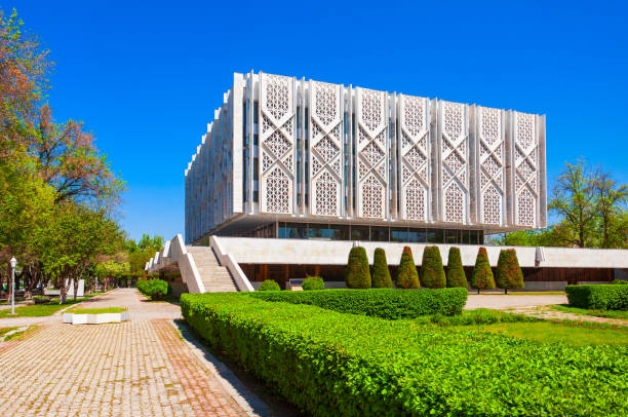
State Museum of History of Uzbekistan
This monumental museum is familiar to anyone who has visited central Tashkent. Following a major renovation, it reopened in a new format: the number of exhibition halls more than doubled, and modern multimedia displays were added. The building itself is considered one of the finest examples of Tashkent modernism, combining strict geometry with traditional Eastern motifs.
Palace of Friendship of Peoples
After the earthquake, the country needed a new main concert venue. That's how the Palace of Friendship of Peoples came to be, with a hall seating nearly four thousand people. For decades it has hosted concerts, festivals, and state events, and the building has become one of the capital's architectural landmarks.
State Museum of Arts of Uzbekistan
Nothing on the museum's facade is accidental. Its famous sun-shading panels serve two functions at once: creating a striking exterior look and protecting the interior from overheating. It's one of the best examples of how Tashkent's architecture adapted to the city's climate.
State Circus
The large blue dome has long been one of Tashkent's symbols. The circus was designed not only as a striking structure but also as a safe building for a region with high seismic activity. The new circus building opened in 1976 after the previous one was destroyed by an earthquake.
Central Exhibition Hall of the Academy of Arts
This building combined the clean lines of modernism with national decorative art. For many years, it has hosted the city's major art exhibitions, biennales, festivals, and contemporary art shows.
Alisher Navoi Cinema Palace
During the 1966 earthquake, an unusual construction made from prefabricated reinforced concrete elements proved its effectiveness. The engineering solutions used here later became a model for other projects in seismically active regions.
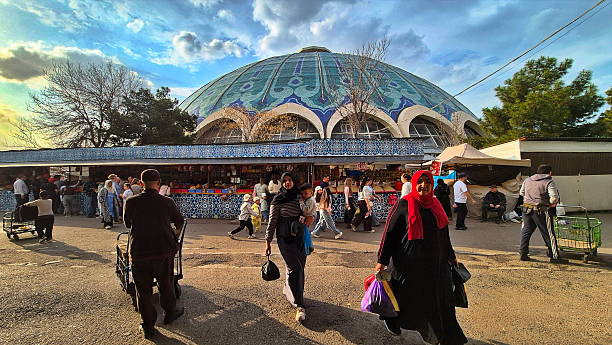
Chorsu Bazaar
The market's modern blue dome appeared in the 1980s, though the trading square itself has existed for centuries, at a crossroads of Silk Road trade routes. Today, Chorsu remains one of Tashkent's most atmospheric places, where visitors can try local cuisine and buy spices, dried fruits, and handcrafted goods.
Kosmonavtlar Metro Station
Among Tashkent's metro stations, Kosmonavtlar stands out. Its design is dedicated to the history of space exploration: architects combined artistic panels, mosaics, and distinctive lighting into a single visual concept, making it one of the most photographed stations in the city.
Sun Heliocomplex
The only site located outside central Tashkent, near Parkent. It houses one of the world's largest solar furnaces, capable of generating temperatures above 3,000°C. The complex was built for scientific research and remains a unique piece of world-class engineering.
Why Does This Matter to Travelers?
Most travelers spend just one or two days in Tashkent, treating it as little more than a starting point before heading to Samarkand, Bukhara, or Khiva. But now the capital has another compelling reason to stay longer.
Tashkent modernism offers a chance to see what Soviet architecture can look like when it doesn't rely on standardized designs, but instead responds to local culture, climate, and tradition. That's why architects from around the world are now studying these buildings, and why the city is gradually becoming a new center for architectural tourism.
If you've already visited Uzbekistan, now is the time to rediscover Tashkent. And if you're just planning your trip, make sure your itinerary includes not only the ancient monuments, but also the buildings that were recently recognized as part of the world's cultural heritage.