





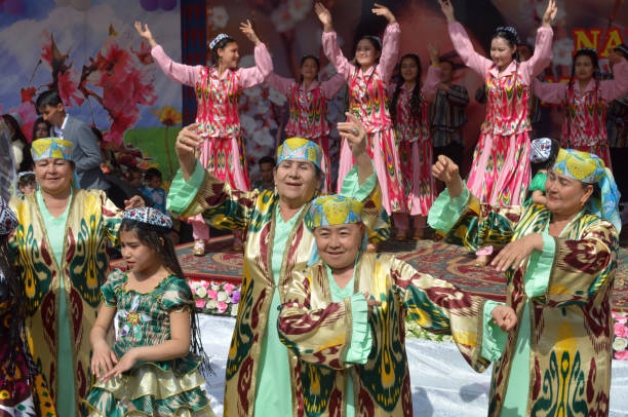
Navruz Holiday in Uzbekistan
Navruz arrives in Uzbekistan in spring. It is celebrated on March 21st, the day of the spring equinox, marking the start of a new astronomical year. And if you ask any Uzbekistani, regardless of ethnicity or age, what their favorite holiday is, the answer will be the same — Navruz. The sun shines brighter, nature awakens from its winter sleep, and hearts fill with joy and merriment — there's plenty to love about this day!
Navruz emerged long before the rise of Islam and was tied to sun worship, reverence for natural phenomena, and rituals aimed at attracting fertility and prosperity. The date was chosen deliberately: March 21st marks the beginning of a new cycle of nature's renewal, as daylight hours grow longer. Navruz was later recognized as the official religious holiday of Zoroastrianism, in the Achaemenid Empire during the 6th–4th centuries BC.
Today the holiday is celebrated in Uzbekistan, Tajikistan, Kazakhstan, Kyrgyzstan, Azerbaijan, Georgia, Albania, Iran, Afghanistan, and in the national regions of Russia — Dagestan, Tatarstan, and Bashkortostan.
Preparations for Navruz in Uzbekistan begin long before March 21st. People decorate their homes, prepare traditional dishes, and invite family and friends over. The country holds a large-scale nationwide hashar (community cleanup day) — a cherished tradition that brings all the country's residents together. A week before Navruz, in every city across Uzbekistan, young people go out to tidy up around homes, schools, and parks, while the older generation teaches them how to plant trees and ornamental plants.
On the holiday itself, it is customary to lay out a lavish table and treat all relatives and neighbors. The dastarkhan must always include traditional dishes prepared only once a year — sumalak and khalisa. Khalisa is made from meat and seven crushed grains, all cooked together until it reaches a uniform, porridge-like consistency. Preparing sumalak, meanwhile, is an entire ritual. Sprouted wheat grains are ground, mixed with flour in boiling oil, and cooked in a large cauldron for a full day, stirred continuously. Stirring the thick mixture for 24 hours straight is no easy task, so a large number of people take part, taking turns. Yet making sumalak isn't seen as a burdensome chore but as a pleasure — the cooking is accompanied by dancing, singing, and jokes. Before cooking begins, small pebbles are placed at the bottom of the cauldron to keep the dish from burning. If one of these pebbles turns up in someone's portion when the sumalak is served, it means good luck will accompany that person all year.
Besides sumalak and khalisa, for Navruz in Uzbekistan housewives also prepare herb-filled pastries and nisholda. Nisholda looks like whipped cream, but it's actually made from egg whites, sugar, citric acid, and the root of the yetmak plant. A solution made from yetmak is used in medicine to treat certain conditions, as well as for fatigue and nervous or physical exhaustion. That's why nisholda is also credited with healing properties.
All the dishes prepared for Navruz in Uzbekistan are not only delicious but also nourishing. Hearty, rich fare restores strength and immunity after the cold winter and provides a boost of vitamins for the new season.
Having fortified themselves with festive food, the people of Uzbekistan head out to greet the new year, attending public festivities and fairs where they can hear traditional songs, watch dances, take part in sporting games, and simply soak in the festive atmosphere.
Navruz in Uzbekistan is more than just a date on the calendar — it's a special time when everyone can feel the joy of renewal, the arrival of spring, and the happiness of being together with loved ones.