





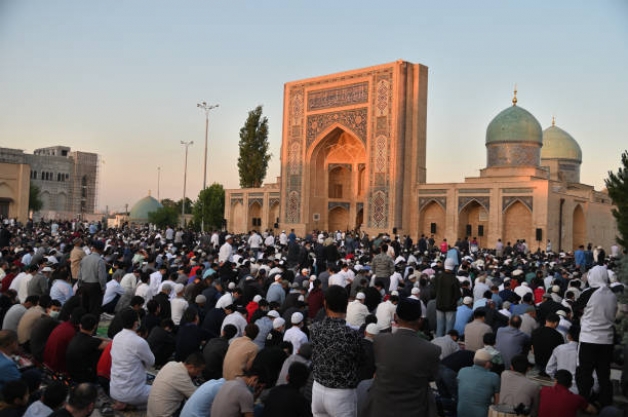
Qurban Hayit in Uzbekistan
This holiday goes by many names: Eid al-Adha, Kurban Bayram. In Uzbekistan, it is known as Qurban Hayit.
One of the most important holidays for Muslims around the world, it is celebrated 70 days after Ramazan Hayit (Ruza Hayit, Uraza Bayram), the end of the sacred month of Ramadan. Qurban Hayit has no fixed date of celebration: it constantly shifts, since it is calculated according to the lunar calendar.
Picture it: bustling markets, the aroma of plov, and the sound of laughter filling the air — that's Qurban Hayit in Uzbekistan! This special day brings families together in a celebration of faith, unity, and generosity.
Qurban Hayit, also known as the "Feast of Sacrifice," holds a special place in the hearts of the people of Uzbekistan. It honors the devotion of the Prophet Ibrahim to God, demonstrating his willingness to sacrifice his son. In a miraculous turn of events, God replaced Ibrahim's son with a ram, symbolizing the importance of faith and sacrifice. This sacred story forms the foundation of Qurban Hayit, a time of reflection, gratitude, and communal togetherness.
Preparations for the holiday begin the day before, on "Arafa" day: people observe a fast and prepare traditional pastry dishes — "kush-tili" (a sweet known as "khvorost"), "bugirsok" (deep-fried donuts made of unleavened dough), "orama" (a roll with a meat filling), "chak-chak" (deep-fried cookies mixed with honey), and other treats. Late in the evening, preparation begins on "tuy oshi" — the festive plov, which must always be shared with neighbors.
The day of Qurban Hayit itself in Uzbekistan begins with the heartfelt Hayit-namaz prayer at the mosque, where believers gather to receive a blessing and express gratitude. Before dawn even breaks, men perform ablution and head to the mosque. Right after the prayer, the most important part of the holiday can begin — the sacrifice of an animal. In Uzbekistan, this is most often a ram. But the sacrificial animal can also be a cow, camel, sheep, or goat. The key condition is that after the sacrifice, the carcass must be divided into three parts: one third (or more) is given to those in need, one third is shared as part of treats with loved ones, and one third is kept by the family. It is forbidden to sell the meat of the sacrificed animal.
But Qurban Hayit isn't only about religious rituals — it's also a time for feasting! The festive spirit is contagious, bringing joy to every corner of the country. Families gather around a lavish table, greeting one another with the words "Qurban Hayit muborak bo'lsin!" ("Happy Qurban Hayit!"). The three days of celebration are spent visiting relatives and neighbors. Special attention is given to the elders of the family.
Despite Qurban Hayit being a holiday of celebration and feasting, loved ones who have passed away are never forgotten. That's why Muslims make sure to visit the graves of the deceased, tidying up the plots at the cemeteries.
As the celebration of Qurban Hayit draws to a close, a spirit of unity and love lingers in the air. The holiday serves as a reminder of how important it is to come together and cherish tradition.