





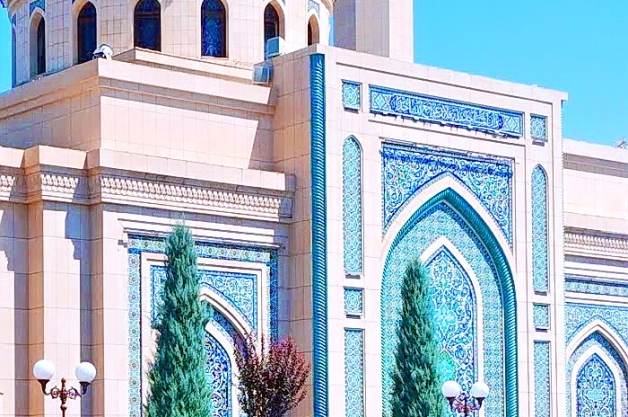
Islom-Ota Mosque in Tashkent – In Memory of Islam Karimov
Tucked away from the bustle of central Tashkent, the Islom-Ota Mosque is a sacred site dedicated to the memory of Islam Karimov, the first President of independent Uzbekistan. This spiritual landmark has deep historical roots, dating back to 1897, when the original mosque—known then as Jurabek—was established.
The mosque was named after General Jurabek, a native of the area and descendant of Amir Timur. He initiated the construction of the religious complex and, following tradition, was later buried on its grounds. Over time, a neighbourhood (mahalla) and cemetery bearing the same name grew around the mosque. After Uzbekistan gained independence, Jurabek’s remains were ceremoniously reinterred at the site.
On April 26, 2015, a tragic fire—caused by a fallen tree damaging electrical lines—severely damaged the original structure. Rather than restore the ruins, it was decided to build a new mosque from scratch: one that would be architecturally sound for worshippers and designed by Islamic sacred traditions. To accommodate more visitors, the mosque’s footprint was doubled to 5,400 square meters.
Following President Karimov’s passing on September 2, 2016, the new mosque—built by his younger daughter—was inaugurated in October of the same year. The architectural masterpiece was created to immortalize her father’s legacy in a space filled with spiritual beauty, both inside and out.
The mosque’s structure follows a cross-shaped layout crowned by a large azure dome. This dome rises above a spacious prayer hall stretching 26 meters in length, filled with natural light and air. Four small towers grace the corners, and an elegant minaret in Turkish style stands tall at 21 meters, making it visible from afar. The full length of the complex measures 72.7 meters.
Rather than limiting the design to a single style, the architects embraced an eclectic approach, harmoniously blending traditional Uzbek architectural motifs with contemporary interpretations. Classic materials like marble, limestone, and ceramic tile were used throughout the structure.
The mosque also houses a library with valuable manuscripts and rare spiritual literature, offering visitors a chance to engage deeply with Islamic scholarship.
Address: Fergana Yuli Street, landmark: “Rice Bazaar”