





How to Get to Khiva from Tashkent
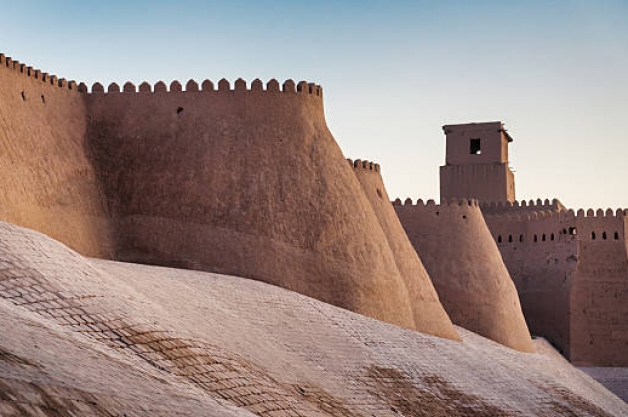
Khiva stands apart from the other cities on the Great Silk Road — it's the farthest from Tashkent. Until recently, getting there always meant a trade-off: fast but expensive (flying), or slow but cheap (the regular train). In 2026, that equation changed — a direct high-speed train arrived. Let's walk through every option, with real travel times.
The "Jaloliddin Manguberdi" High-Speed Train — the New and Most Exciting Option
Since May 2026, a high-speed electric train called "Jaloliddin Manguberdi" has been running directly between Tashkent and Khiva — built by South Korea's Hyundai Rotem and named after the Khorezmshah who led resistance against Genghis Khan's forces. The train reaches speeds of up to 250 km/h and covers roughly 1,020 km in 7–7.5 hours, stopping along the way in Samarkand and Bukhara — so the journey itself becomes a mini tour of the Silk Road.
A second train joined the route in July 2026, and departures now run almost daily in both directions. The carriages feature climate control, rotating seats, multimedia screens, and dedicated space for passengers with limited mobility.
The route is already popular, and frequency is still limited — it's worth booking tickets in advance, ideally 30–45 days ahead, especially during high season. With Dolores Travel, you don't need to worry about any of this: tickets are already included in your tour price, and we handle the booking — all you choose are the dates.
Best for: travelers who want a balance of speed and reasonable budget, especially those who'd love to see Samarkand and Bukhara pass by the window — no transfers, no extra logistics.
By Plane — the Fastest Way
Uzbekistan Airways flies from Tashkent to Urgench — the airport closest to Khiva — several times a week. The distance by air is about 720 km, with flight time between 1 hour 20 minutes and 1.5 hours. From the airport to the gates of Ichan-Kala is another 30 minutes or so along a straight road.
Dolores Travel arranges your transfer to arrive right on time for landing.
Best for: travelers most pressed for time, or those combining Khiva into a wider itinerary with multiple flights.
By Regular Train — the Budget Option
The overnight train from Tashkent to Urgench takes around 13–14 hours, with platzkart, coupé, and first-class (SV) carriages available. Comfort is more modest than the high-speed train — air conditioning isn't available everywhere, and there are stops at major stations along the way. What it lacks in speed, it makes up for in price — and an overnight journey saves you a night's hotel stay.
Best for: travelers for whom budget comes first.
By Car — for Those Who Want the Journey Itself
The road covers roughly 970 km, taking about 11–13 hours, passing through Jizzakh, Samarkand, and the Kyzylkum Desert. This route usually calls for an overnight stop along the way.
Best for: road-trip travelers who want the flexibility to break up the journey with stops in Samarkand and Bukhara.
Comparing Ways to Reach Khiva
|
Option |
Travel Time |
Comfort |
Best For |
|
High-speed train "Jaloliddin Manguberdi" |
7–7.5 hours |
High |
A balance of speed, budget, and views of Samarkand/Bukhara en route |
|
Flight to Urgench |
1.5 hours |
High |
Travelers short on time |
|
Regular train to Urgench |
13–14 hours |
Basic–moderate |
Minimal budget, overnight travel |
|
Car |
11–13 hours |
Depends on the vehicle |
Road trips with stops in Samarkand and Bukhara |
Exact schedules and departure days should be confirmed at the time of booking — the route network is still expanding
However You Travel — Khiva Welcomes You the Same Way.
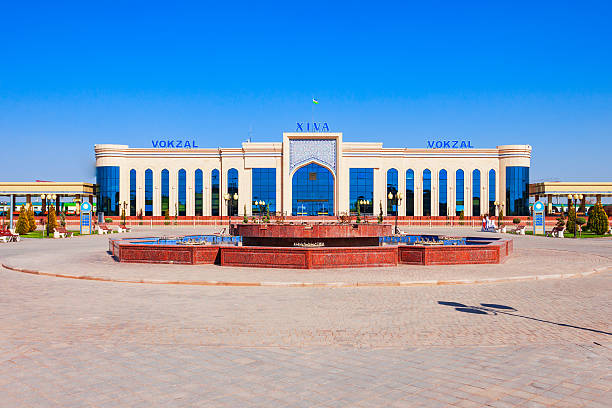
Whichever option you choose, logistics are never your concern as a Dolores Travel guest: train or flight tickets are already included in your tour price, and on arrival you're met by a transfer — at the airport, at Khiva's railway station, or a car with a driver from Tashkent. All that's left for you to decide is what matters most — time, budget, or the journey itself as part of the experience.